
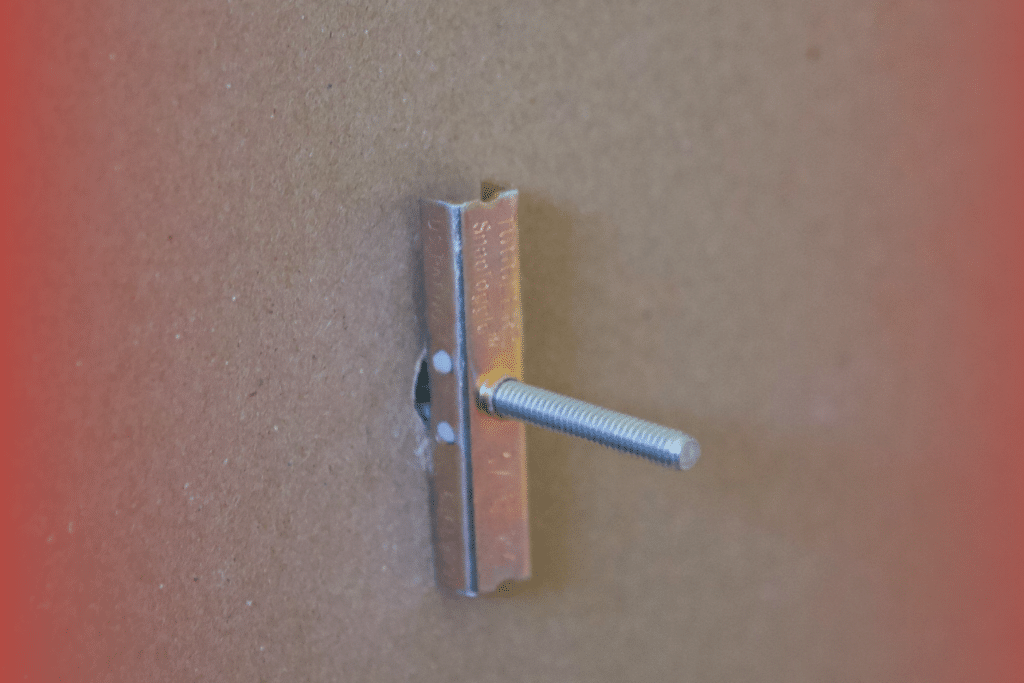
If you have ever taken down a shelf, mirror, or wall-mounted fixture, you have likely dealt with drywall anchors. While they may seem small, removing them the wrong way can quickly lead to cracked drywall, oversized holes, and wall repairs that stand out more than expected.
In many homes, drywall anchors are installed during everyday projects. Over time, those fixtures come down, rooms get repainted, or homes are prepared for sale. That is often when problems begin.
Because drywall anchors are designed to stay in place, removing them without the right technique can weaken the wall surface.
Fortunately, with the proper approach, drywall anchors can be removed without damaging your walls.
This guide explains why drywall anchors are used, how to remove them safely, what mistakes to avoid, and how these details may impact a home inspection.
Why Homeowners Need to Remove Drywall Anchors Properly
Improper anchor removal often causes more damage than the anchor itself.
Drywall anchors hold weight by gripping the wall from behind. Because of this design, pulling them out incorrectly can tear drywall paper, crack the surface, or cause the gypsum core to crumble.
As a result, what starts as a small anchor hole can quickly become a noticeable repair.
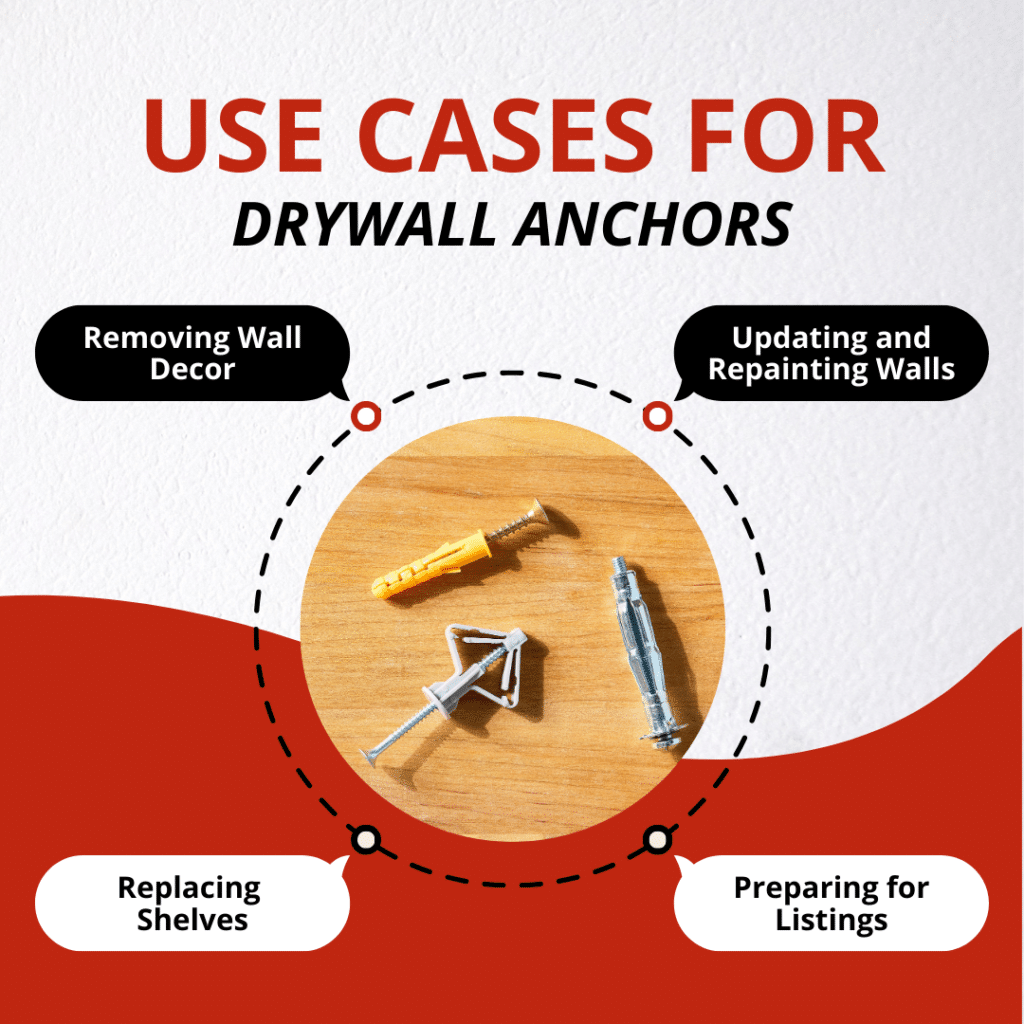
Homeowners most often deal with anchors when:
- Removing wall decor before selling
- Updating rooms or repainting
- Replacing bathroom shelves, towel bars, or hooks
- Preparing for listing photos or inspections
From an inspection standpoint, drywall damage is usually cosmetic.
However, inspectors often document cracked walls, loose patches, or visible repair work.
When these issues appear throughout a home, buyers may question overall upkeep.
According to the National Association of Realtors, 58% of buyers say a home’s condition strongly influences their decision to make an offer, which makes clean, well-finished walls more important than many homeowners realize.
How Can Drywall Anchors Damage Walls?
When anchors are installed correctly and used within their weight limits, they work well. However, problems often occur when anchors are overloaded or used instead of studs for heavier items and fixtures.
Anchors expand or lock behind drywall, which increases the risk of damage during removal.
Most drywall anchors rely on pressure or expansion behind the wall. As a result, pulling them out forcefully transfers that pressure to the drywall surface.
Common Drywall Anchor Types
| Anchor Type | How It Works | Removal Risk |
| Plastic expansion anchors | Expand as the screw tightens | Moderate |
| Self-drilling anchors | Cut into drywall during installation | Moderate |
| Metal sleeve anchors | Expand behind the wall | High |
| Toggle bolts | Open wings inside the wall cavity | High |
Because metal anchors and toggle bolts grip the wall more aggressively, they require extra care during removal.
Tools You Need to Remove Drywall Anchors Safely
Basic hand tools are usually all you need.
Most drywall anchor removal jobs do not require power tools. In fact, drills and aggressive tools often cause more damage than necessary.
Helpful tools include:
- Flathead or Phillips screwdriver
- Needle-nose pliers
- Utility knife
- Putty knife
- Lightweight hammer
- Spackling compound or joint compound
- Sandpaper or sanding sponge
Whenever possible, use hand tools and work slowly to protect the surrounding drywall.
How to Remove Drywall Anchors Without Damaging Your Walls
Remove anchors gently or push them into the wall when needed.
The safest method depends on the anchor type.
Plastic Expansion Anchors
After removing the screw, grip the anchor gently with pliers. If it slides out easily, remove it slowly. However, if it resists, lightly tap it so it falls into the wall cavity.
Self-Drilling Anchors
Turn the anchor counterclockwise with a screwdriver. Apply steady pressure and pull gently as it backs out. Stop immediately if the drywall begins to tear.
Metal or Toggle Anchors
Once the screw is removed, push the anchor into the wall cavity. These anchors are rarely designed to be pulled out cleanly.
Damage That Can Happen If Drywall Anchors Are Removed or Installed Incorrectly
Improper handling can weaken drywall and create safety concerns.
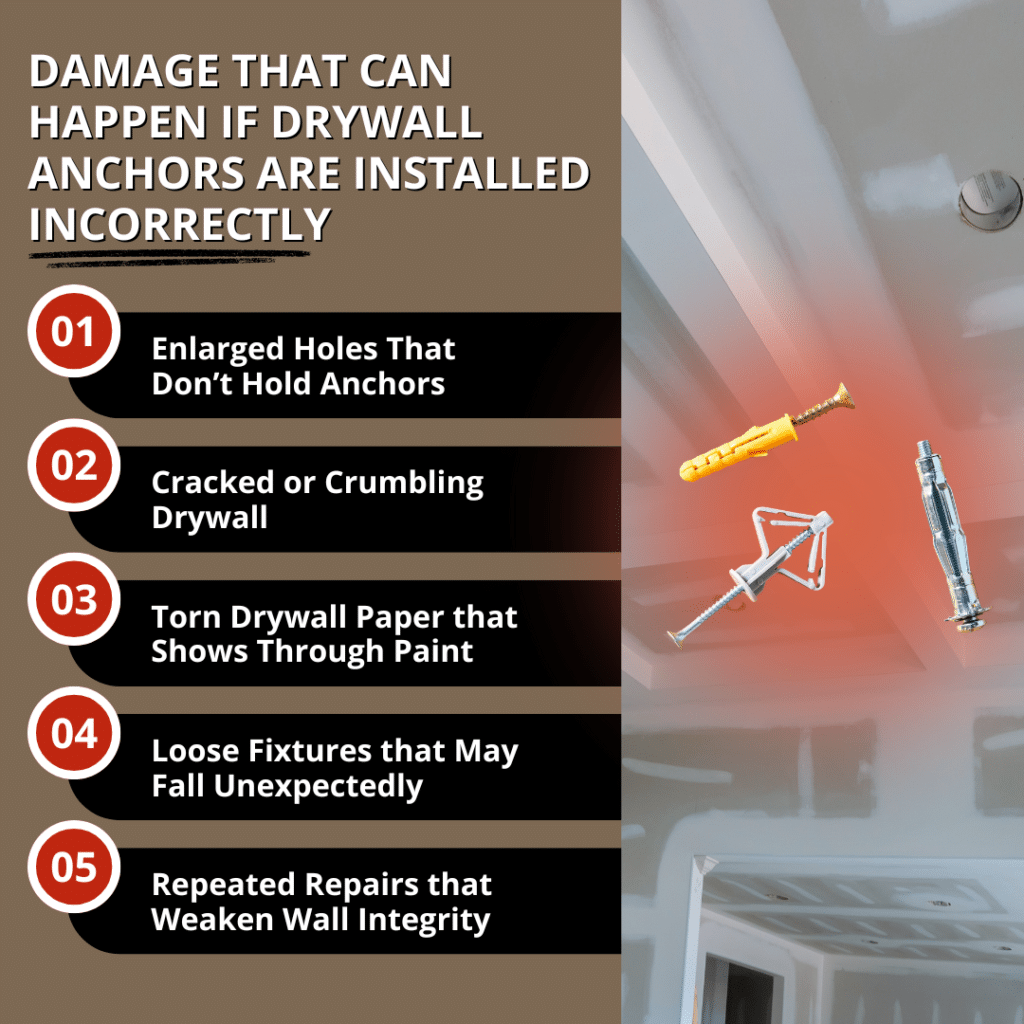
When anchors are removed or reinstalled incorrectly, the damage often extends beyond the original hole. Common issues include:
- Enlarged holes that no longer hold anchors
- Cracked or crumbling drywall
- Torn drywall paper that shows through paint
- Loose fixtures that may fall unexpectedly
- Repeated repairs that weaken wall integrity
These problems are especially common in kitchens and bathrooms, where moisture can soften drywall over time.
Mistakes to Avoid When You Remove Drywall Anchors
Rushing is the biggest mistake.
Removing drywall anchors too quickly often leads to unnecessary damage. Instead, avoid these common errors:
- Pulling Anchors Out Forcefully:
- This can tear drywall paper and break the gypsum core, creating a larger repair area.
- Reusing Damaged Holes:
- Once drywall is weakened, it may not securely hold a new anchor, which can lead to failure later.
- Installing New Anchors Without Repairing the Drywall:
- Skipping repairs prevents anchors from gripping properly and increases cracking.
- Using the Wrong Anchor for the Item’s Weight:
- Underrated anchors often loosen or pull out over time.
- Skipping Sanding Before Painting:
- Unsanded patches show through paint and are easy to spot during inspections and showings.
These mistakes often lead to visible repairs that draw attention and raise concerns during buyer walk-throughs.
How to Patch and Finish the Wall After Anchor Removal
Proper patching restores both appearance and durability.
Basic Patching Steps
- Remove loose drywall or paper.
- Apply spackling compound evenly.
- Allow it to dry completely.
- Sand until smooth and flush.
- Apply a second coat if needed.
- Prime and repaint to match the wall.
For holes larger than a quarter, a drywall patch kit provides better long-term strength.
When You Should Leave Drywall Anchors in Place
In some cases, leaving anchors causes less damage.
Leaving anchors in place may be the better option when:
- The anchor sits flush with the wall
- The wall has a heavy texture
- The anchor is hidden behind fixtures
- The drywall is already weakened
In these situations, patching over or concealing the anchor may be safer.
Should You Remove Drywall Anchors Before a Home Inspection?
It depends on visibility and condition.
Inspectors typically focus on wall damage rather than unused anchors. Anchors become a concern when they:
- Support loose fixtures
- Leave visible cracks or holes
- Show poor repair work
- Appear in high-traffic or visible areas
Clean repairs help present a well-maintained interior.
When to Call a Professional Instead of DIY
Call a professional when the damage goes beyond a simple patch.
Professional repair may be needed if:
- Drywall crumbles when touched
- Multiple anchors are clustered together
- Walls are plaster or heavily textured
- Moisture damage is present
In these cases, scheduling professional repairs often saves time and improves the final appearance.
Related Questions
Do drywall anchors cause issues during a home inspection?
Drywall anchors themselves are rarely a concern, but inspectors often document wall damage, loose fixtures, or poorly repaired holes as part of interior observations.
What types of wall damage are most often noted by home inspectors?
Cracked drywall, uneven patches, visible anchor holes, and loose wall-mounted items are commonly observed and grouped with general interior maintenance findings during inspections.
Can repeated drywall repairs weaken interior walls?
Yes. Multiple anchor installations and removals in the same area can weaken drywall, making future repairs and fixtures less secure.
Are wall-mounted fixtures inspected during a home inspection?
Fixtures such as shelves, cabinets, towel bars, and handrails are often checked for stability. Loose fixtures may be noted as safety or maintenance concerns.
How does cosmetic wall damage affect buyers?
While cosmetic issues may not impact safety, visible wall damage can influence buyer perception and confidence.
Should drywall repairs be completed before listing a home?
Many homeowners address visible wall damage before a home inspection and listing to help present a cleaner and more polished interior.
Conclusion
Removing drywall anchors without damaging your walls takes patience, the right tools, and proper technique. When done correctly, these small repairs help maintain wall integrity and improve the overall appearance of your home.
If you are preparing to sell or simply want to avoid inspection surprises, paying attention to details like drywall repairs can make a meaningful difference.
If you want professional insight into your home’s condition before listing or buying, Champia Real Estate Inspections can help.
A thorough inspection identifies visible issues, maintenance concerns, and areas that may raise questions, allowing you to plan next steps with clarity and confidence.